



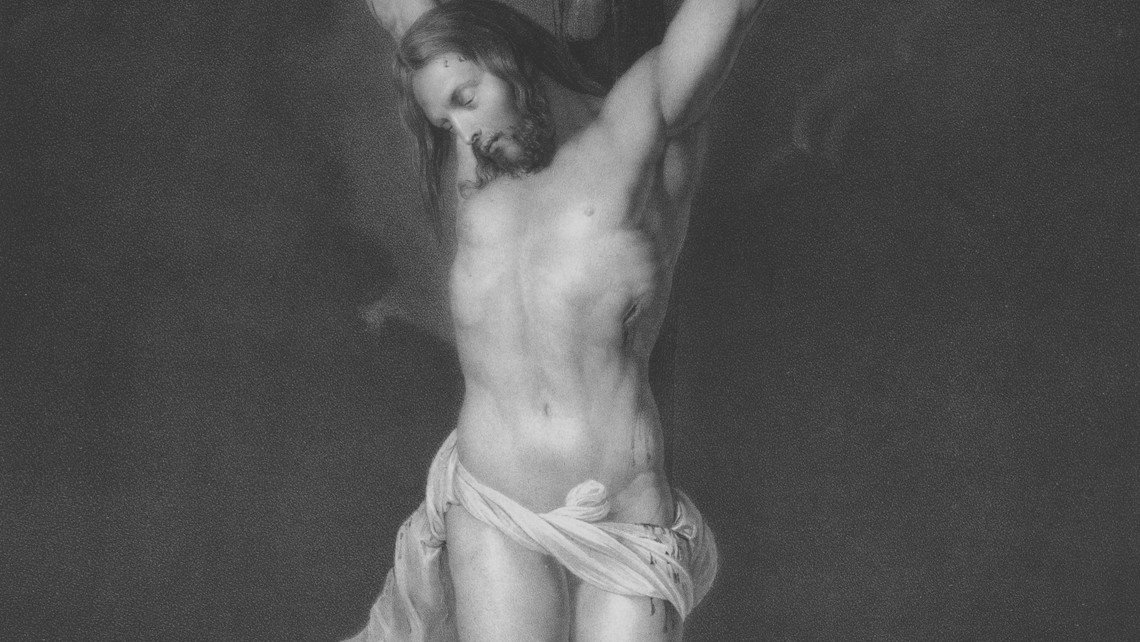
Every time we recite the Creed at Mass, we publicly affirm the suffering of Christ at the hands of Pontius Pilate. To the non-religious person, a prayer that publicly affirms the suffering of another human being may not make much sense. The saving events expressed in the Nicene and Apostles Creed reveal that the identity of every Christian is intimately tied to the suffering and death of Jesus Christ. The suffering sequence in the Creed serves as the source of the Good News of Jesus Christ. Anyone who proclaims the Good News of Jesus Christ also proclaims the Good News of his crucifixion. In the book of Hebrews, we are reminded that God’s saving plan was accomplished by Jesus Christ, for then he would have had to suffer repeatedly since the foundation of the world. But as it is, he has appeared once for all at the end of the age to put away sin by the sacrifice of himself.[1]
Jesus’ suffering from a strictly human perspective is viewed as a contradiction, I argue, because the result of Jesus’ suffering was death. The argument here is even unto death, man still rejected the message of salvation. This demonstrates the battle between good and evil, and the necessity of suffering as a path to salvation. Because man operates within two realities, human and divine, the human reality faces a constant tension between good and evil, encountering a daily discernment to choose one over the other. The Divine reality is what God has revealed through His Son Jesus Christ, and man’s decision to address his relationship with God.
These realities that I speak of involve a struggle that every human being faces between their own carnal desires and the desire for God. The struggle to avoid the near occasion of sin or worse, from a human perspective suffer some type of calamity in the name of Jesus Christ, may cause the person to reject God altogether. The Catechism addresses this tension as follows,
In her Magisterial teaching of the faith and in the witness of her saints, the Church has never forgotten that “sinners were the authors and the ministers of all the sufferings that the divine Redeemer endured.” Taking into account the fact that our sins affect Christ himself,390 the Church does not hesitate to impute to Christians the gravest responsibility for the torments inflicted upon Jesus,[2]
The death of Christ reveals a redemptive act, one that every human being, by nature of their baptism into the life and death of Jesus, receives. This unveils the Church’s teaching on redemptive suffering that the redemptive act of Christ on the cross serves as the path to associate our suffering on earth with the suffering Christ endured. We are reminded of this relationship in the road to Emmaus discourse, when Jesus had to remind the two disciples who did not recognize him and were questioning the whole purpose of his death due to their lack of faith, why He had to suffer and die. He said to them, “O foolish men, and slow of heart to believe all that the prophets have spoken! Was it not necessary that the Christ should suffer these things and enter into his glory?[3]
In the Acts of the Apostles, we are reminded again of the necessity of Christ’s suffering, emphasized by St. Peter after Pentecost,
“Men of Israel, hear these words: Jesus of Nazareth, a man attested to you by God with mighty works and wonders and signs which God did through him in your midst, as you yourselves know—this Jesus, delivered up according to the definite plan and foreknowledge of God, you crucified and killed by the hands of lawless men. But God raised him up, having loosed the pangs of death, because it was not possible for him to be held by it.[4]
The mere thought of suffering for the sins of others may be seen as a contradiction. Why should anyone bear the sins of others to the point of death? If Jesus came to destroy the works of the devil, which liberates man from the pain of sin and death, then it requires a distinctive act of faith, one that supersedes all forms of evil. Again, in the Road to Emmaus discourse, Jesus reminds the disciples one last time about the necessity of his suffering for the salvation of humanity,
These are my words, which I spoke to you while I was still with you, that everything written about me in the law of Moses and the prophets and the psalms must be fulfilled. Then he opened their minds to understand the scriptures, and said to them, thus it is written that Christ should suffer and on the third day rise from the dead.[5]
Our entire human history, from the moment of the fall, has been a battle against the forces of evil and a struggle to avoid falling into sin and despair. To suffer under God’s grace and mercy is to seek the greater good. Though sin may appear overwhelming, St. Paul reminds us that grace abounds the more.[6] This is the story of our humanity intimately bound to the Divine Lord and Savior Jesus Christ. Our path to salvation is a constant renunciation of the devil’s proposal to reject God and his infinite love and mercy. God’s grace is greater than the devil’s envy.
Realize that illness and other temporal setbacks often come to us from the hand of God our Lord, and are sent to help us know ourselves better, to free ourselves of the love of created things, and to reflect on the brevity of this life, and, thus, to prepare ourselves for the life which is without end.
St. Ignatius of Antioch
Latest Posts

What Happens When You Conceal the Message of the Gospel?
In his first letter to St. Timothy, St. Paul warns about false teachers and against anyone who teaches a doctrine that differs from the...Read more

Is the Aim to Teach Toward Heaven?
As the dawn of a new school year approaches, the inevitable convergence of parents, students, and teachers presents an educational opportunity that, from a...Read more

Does Speaking About Christ Terrify You?
It is not often that you encounter a group of people who exhibit a sense of terror when asked about the first time they...Read more

Archive
- January 2024 (4)
- December 2023 (2)
- November 2023 (4)
- October 2023 (5)
- September 2023 (4)
- August 2023 (3)
- July 2023 (4)
- June 2023 (2)
- May 2023 (5)
- April 2023 (3)
- March 2023 (1)
- February 2023 (4)
- January 2023 (4)
- December 2022 (3)
- November 2022 (3)
- October 2022 (2)
- September 2022 (4)
- August 2022 (4)
- July 2022 (2)
- June 2022 (2)
- May 2022 (2)
- April 2022 (2)
- March 2022 (2)
- February 2022 (3)
- January 2022 (5)
- December 2021 (3)
- November 2021 (3)
- October 2021 (3)
- September 2021 (4)
- August 2021 (4)