



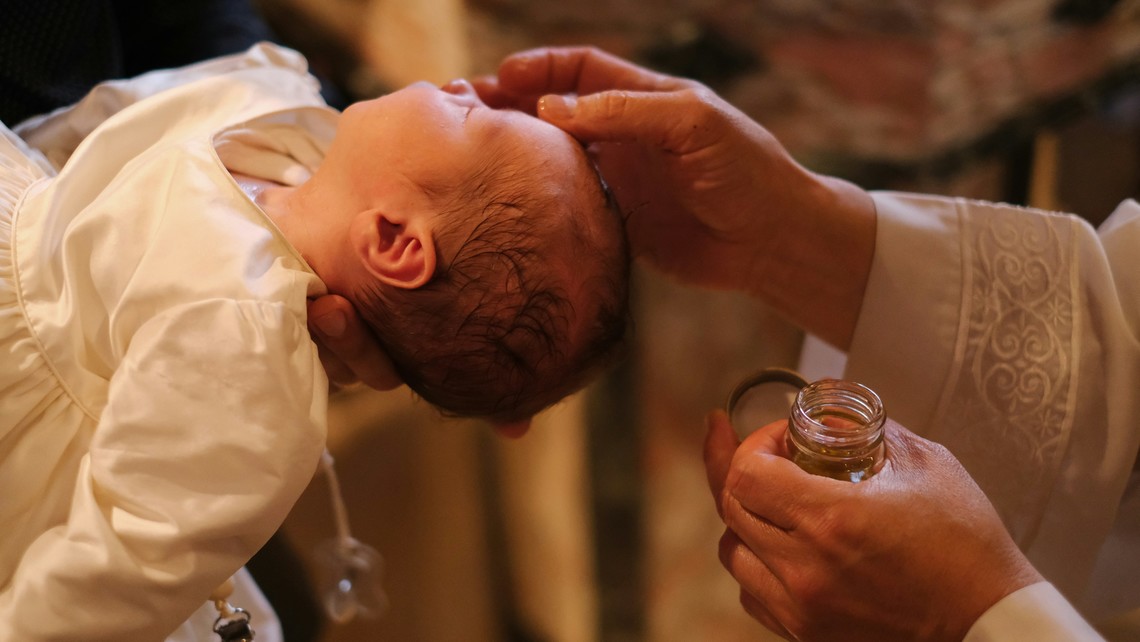
An important characteristic all parents possess, I argue, is that of an advocate over and with their children. Parents as advocates stand by the side of their child to protect them from harm, guide and console their child within a Catholic worldview toward the moral good. Part of parental advocacy within a Catholic context is the path to both receiving and expressing their child’s sacramental identity as instituted and called forth by Christ.[1] The necessity and urgency to engage in the sacramental life is, I argue, the single most important priority of a parent because of its association with the Paschal Mystery, the saving actions of Christ who instituted the Church and the sacraments for our salvation.
Within a salvific mindset, every parent, I propose, would want to prepare their child for heaven, if, though, this is the mindset. Unfortunately, the development of sacramental practice, especially over the last century, has become more of a cultural functionality of the Catholic faith than an authentic desire to develop an active relationship with Jesus Christ that will lead to eternal life with Him. This mindset has initiated a cultural practice where the sacrament, especially the sacraments of initiation, is viewed as a cultural rite of passage that has more to do with a perception of human maturity over grace and salvation, e.g., the sacrament of Confirmation. Even more, the sacraments of initiation may be viewed as a relief by the parents that nothing else needs to be done because they are “safe” after receiving the sacraments. The thought is that the daily practice of the Catholic faith is not necessary. This was the thought of a parent who actually told me that now that his son had received all the sacraments, “he was done with the requirements of the Church and could move on.”
Returning to the explanation of the word advocacy, from a biblical perspective, to advocate means to counsel or defend. St. John the Apostle describes Jesus as the advocate in his first letter.[2] In his Gospel, St. John describes the Holy Spirit as the advocate.[3] In both descriptions, the term advocate is defined as someone who guides, protects, and leads a person toward the right path. In reference to God and His Church, the advocate is someone leading another to holiness and ultimately a salvific relationship with God through His Son, Jesus Christ.
Jesus Christ, the Divine Advocate, is an important characteristic we as the people of God should become more familiar with because it is directly associated with the sacramental life, beginning with the first sacrament of initiation, baptism. The distinction of the sacrament of baptism is that it marks the first primary entryway into a salvific relationship with Jesus Christ. Christ, the author of the sacramental life, reveals a path one needs to enter into the Kingdom of Heaven.[4] The Divine Advocate goes to great lengths to provide the opportunity for all who freely desire to provide on behalf of someone else (advocate) the opportunity to enter into a sacramental relationship with him.
The opportunity to receive the love of Jesus Christ through the gift of grace conferred through the sacraments is an act that was never intended to be impeded, but instead proposed, expressed, and demonstrated as a path to heaven. The Catechism of the Catholic Church specifically states that the whole liturgical life of the Church revolves around the Eucharistic sacrifice and the sacraments.[5] The Catechism goes on to describe the importance of the sacraments as follows,
Sacraments are “powers that comes forth” from the Body of Christ, which is ever-living and life-giving. They are actions of the Holy Spirit at work in his Body, the Church. They are “the masterworks of God” in the new and everlasting covenant.[6]
The purpose of the sacraments is to sanctify men, to build up the Body of Christ, and finally, to give worship to God.[7] If the sacraments are so important, why would anyone want to delay receiving them? The identity of every human being made in the image and likeness of God is to be receptive to strengthening their relationship with God the Father. This process is very important within the early stages of cognitive development, spiritual, emotional, and psychological for a child. A child needs to know that they are protected, nurtured, and nourished. The parent advocate is charged with providing this type of environment, which, when associated with the one, holy, Catholic, and Apostolic Church, initiates a view of the world and environment through a Catholic lens centered on an active relationship with Jesus Christ.
The disposition of the parent as an active Catholic disciple is central to the spiritual Catholic development of a child. The child must be exposed and receive a love of Christ from their parents. As the child strengthens his awareness of the world through a Catholic worldview, as witnessed by his parents, the argument is that the child will express a desire to know his Catholic faith and seek opportunities to grow in his faith.
The process I just described reflects what was undertaken in the Diocese of Columbus to lower the age of Confirmation. As Sr. Director for the Office of Evangelization, along with the Office of Divine Worship, our discussion with Bishop Earl Fernandes about the pastoral and catechetical state of the Church revealed a very apparent urgency to resuscitate the role of the family, especially parents, as the primary educators of their children. But also, the necessity to avail the children of these families the grace of the sacramental life, especially at a younger age, specifically the reception of the sacrament of Confirmation.
The number of children who stopped practicing the Catholic faith after reception of their First Holy Communion, and not returning to the faith until it was time to receive the sacrament of Confirmation, was an apparent concern. This visible sacramental vacuum reflected a cultural and functional view of the sacraments as spiritual tokens or rites of passage. There was a disassociation between the gift of grace in the sacrament, the Church, and strengthening one’s relationship with Jesus Christ. This reality led to a discussion about the role of the family and its relationship with the sacramental life of the Church, and the question: Can someone be too young to receive the sacraments?
The answer to the question depends on a proper understanding of the sacramental life and the preparation to receive the sacraments that is both remote and proximate, which allows the child to mature in awareness of his relationship with God. If a child were allowed to receive a sacrament at a younger age, exhibiting the proper disposition, should we? My argument is yes, because it provides the child an opportunity to strengthen the grace received at Baptism, awaken an opportunity to know Jesus Christ, and develop an active relationship with Him. Thus, reception of the sacraments should not be denied.
The reality of the sacramental phenomenon occurring in the Diocese of Columbus should not be viewed as a phenomenon. Instead, it should be observed as a natural progression of forming an intimate relationship with Christ through the sacramental life of the Church, not as a rite of passage but as a path to heaven.
His divine power has granted to us all things that pertain to life and godliness, through the knowledge of him who called us to his own glory and excellence, by which he has granted to us his precious and very great promises, that through these you may escape from the corruption that is in the world because of passion, and become partakers of the divine nature.
1 Pt 1:3-4
Latest Posts

Is God Available?
In the prologue of St. John’s Gospel, from the onset, we encounter that the creation of the world is predicated on the Word of...Read more

Is Prayer Viewed As a Gift or a Nuisance?
In his letter to the Ephesians, St. Paul provides a methodology for proclaiming Christ as the center of Christian prayer, addressing the love between...Read more

Is Jesus my Savior or my Friend?
When the angel Gabriel announced to the Blessed Virgin Mary that she would bear a son and that her son was to be called...Read more

Archive
- May 2021 (5)
- April 2021 (4)
- March 2021 (5)
- February 2021 (3)
- January 2021 (3)
- December 2020 (3)
- November 2020 (5)
- October 2020 (4)
- September 2020 (5)
- August 2020 (1)
- May 2020 (1)
- January 2020 (2)
- December 2019 (1)
- August 2019 (1)
- July 2019 (1)
- May 2019 (1)
- March 2019 (1)
- February 2019 (1)
- January 2019 (22)
- November 2018 (1)
- « first
- ‹ previous
- 1
- 2
- 3