



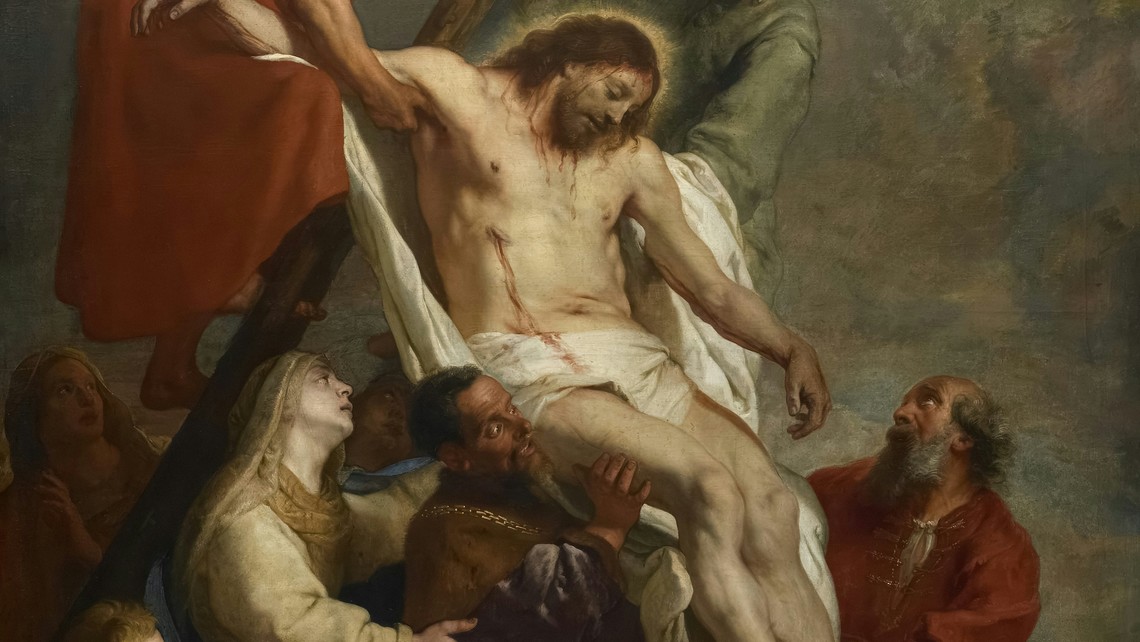
In his letter to the Colossians, St. Paul provides a blueprint for assenting to a new life wholly dedicated to Christ. He prefaces his proposal by telling us that if we have been raised by Christ, then we must seek the things from above, where Christ is seated at the right hand of God.[1] He confirms his position by reminding us to set our minds on things that are above, not in things that are on earth.[2] This introductory sequence is very practical as it simply tells us to avoid earthly things that distract us from an active relationship with Jesus Christ.
Associating oneself with Christ means that you are no longer bound to sin and death but have received a new life in Christ through baptism. St. Paul tells us that when Christ, who is our life, appears, then you will also appear with him in glory.[3] This entire discourse sets the stage for one of the greatest Doctors of the Church, St. Francis De Sales, and his seminal work, the Introduction to the Devout Life. In its original format, the Introduction to the Devout Life was a series of letters St. Francis wrote to serve as a practical guide to Christian perfection.[4]
A central premise of his work is to guide a person on how to advance in holiness in this world through prayer and a willful embrace of the Cross with joy. The first step in embracing a Devout Life with Christ is to purify one’s soul. Purification for St. Francis De Sales serves as the foundation for allowing an intimacy or prayerful union with God to begin. At first glance, the process of purification is to be directed towards the evils and dangers of sin, i.e., mortal and venial sin. Once established, the person is called to view themselves as God’s creation, from whom we are created in his image and likeness.
As mentioned earlier, St. Paul provides us with a similar path towards purifying our souls and strengthening our relationship with Christ. He lays out very directly what we should do as follows,
Put to death therefore what is earthly in you: immorality, impurity, passion, evil desire, and covetousness, which is idolatry. On account of these, the wrath of God is coming. In these you once walked, when you lived in them. But now put them all away: anger, wrath, malice, slander, and foul talk from your mouth. Do not lie to one another, seeing that you have put off the old man with his practices and have put on the new man, who is being renewed in knowledge after the image of his creator.[5]
The act of putting to death our earthly inclination for heavenly ones means that, through our baptism and assent of faith to Christ and His Church, we can engage in the struggle for holiness and the purification of our souls not apart from Christ but with Him. Virtue now becomes the forefront of our identity, enabling us to imitate Christ. The Catechism provides us with context for our new life and the purification of the soul through the exercise of the beatitudes in our daily life,
Blessed are the pure in heart, for they shall see God.” “Pure in heart” refers to those who have attuned their intellects and wills to the demands of God’s holiness, chiefly in three areas: charity; chastity or sexual rectitude;309 love of truth and orthodoxy of faith. There is a connection between purity of heart, of body, and of faith: The faithful must believe the articles of the Creed “so that by believing they may obey God, by obeying may live well, by living well may purify their hearts, and with pure hearts may understand what they believe.”[6]
St. Francis De Sales inferred the importance of having an eschatological mindset to assess our state of life in relation to death, judgment (purgatory), heaven, and hell. These stages of spiritual discernment provide a spiritual framework to discern the ability to seek or reject the purification of the soul and, in turn, either embrace or reject a devout life with Christ. The culmination of these preparatory steps allows us to understand what Christ did and hopefully leads us to proclaim Christ crucified with joy and understand the necessity to actively maintain a devout life with Christ as our gateway to Heaven. St. Francis De Sales reminds us that the desire to purify the soul is all for naught if our final act of faith is not centered on the true presence of Christ in the Holy Eucharist,
One: Begin with due preparation whilst the priest is at the foot of the altar, placing yourself in the presence of God, acknowledging your unworthiness, and asking pardon for your faults. Two: When he goes up the steps and to the Gospel, meditate generally on the Birth and Life of our Savior. Three: From the Gospel until after the Creed, reflect upon His teaching, and renew your resolution to live and die in the obedience and faith of the Holy Catholic Church. Four: From the Creed to the Lord’s Prayer, apply your mind to the words of Christ in union with the Death and Passion of the Redeemer, which are essentially and actually set forth in this holy Sacrifice, which, together with the priest and all present, you offer to God the Father for His glory and your salvation. Five: From the Pater Noster to the Communion, offer earnestly the prayers of your heart, ardently desiring to be forever joined and united to our Savior by an eternal love. Then to the conclusion, thank him for His Incarnation, His life, His death, His passion, and the love He shows to us in the blessed Sacrifice . . .[7]
Latest Posts

Is the Aim to Teach Toward Heaven?
As the dawn of a new school year approaches, the inevitable convergence of parents, students, and teachers presents an educational opportunity that, from a...Read more

Does Speaking About Christ Terrify You?
It is not often that you encounter a group of people who exhibit a sense of terror when asked about the first time they...Read more

Marital Sacrifice and the Way of the Cross
The act of sacrifice associated with the sacrament of marriage is heard, but I argue often misunderstood because of the preoccupation with the view...Read more

Archive
- August 2021 (4)
- July 2021 (4)
- June 2021 (4)
- May 2021 (5)
- April 2021 (4)
- March 2021 (5)
- February 2021 (3)
- January 2021 (3)
- December 2020 (3)
- November 2020 (5)
- October 2020 (4)
- September 2020 (5)
- August 2020 (1)
- May 2020 (1)
- January 2020 (2)
- December 2019 (1)
- August 2019 (1)
- July 2019 (1)
- May 2019 (1)
- March 2019 (1)
- February 2019 (1)
- January 2019 (22)
- November 2018 (1)
- « first
- ‹ previous
- 1
- 2
- 3