



In his letter to the Romans, St. Paul makes an important point about the volatile relationship between sin and grace, where sin increased, grace abounded all the more.[1] The propensity for man to engage in sinful behavior, even if it may appear insurmountable to the human intellect, is not greater than the gift of grace instituted by Christ through His death and resurrection on the Cross. What St. Paul reminds us of is that the death and resurrection of Christ unveiled an outpouring of grace without limits. The importance of the events of Christ’s life, death, and resurrection is that they provided us with the gift of grace necessary to resist and overcome sin.
The Catechism makes an important point about the gift of grace and how it addresses sin,
But to do its work, grace must uncover sin so as to convert our hearts and bestow on us “righteousness to eternal life through Jesus Christ our Lord.”[2]
An important attribute that grace provides is the opportunity to discover the origin of our sinful habits. The Catechism uses the analogy of a physician probing a wound before treating it.[3] This means that God, through his infinite love and mercy, provides us with free and undeserved help to respond to His call and become His children.[4] Hence, God’s grace introduces us into the life of the Trinity, meaning that, by baptism, we can actively participate in a sacramental life with Christ. The gradual development of an active relationship with Christ requires uncovering sin and its origin, and deliberately choosing not to fall prey to its temptation.
The path to Christ requires the development of an honest spiritual assessment of the self, one that addresses the current state and awareness of one’s actions and whether they reflect or reject the life and teachings of Jesus Christ and His Church. Some questions to ask are: How have you accommodated your life to the world? Has this accommodation been at the expense of God or others? Does it make spiritual and moral sense to accommodate to the will of God? St. Paul provides us with a strategy to avoid an accommodation to the world, and instead accommodate ourselves to the will of God.
Therefore, be imitators of God, as beloved children. And walk in love, as Christ loved us and gave himself up for us, a fragrant offering and sacrifice to God. But immorality and all impurity or covetousness must not even be named among you, as is fitting among saints. Let there be no filthiness, nor silly talk, nor levity, which are not fitting; but instead let there be thanksgiving. Be sure of this, that no immoral or impure man, or one who is covetous (that is, an idolater), has any inheritance in the kingdom of Christ and of God. Let no one deceive you with empty words, for it is because of these things that the wrath of God comes upon the sons of disobedience. Therefore, do not associate with them, for once you were darkness, but now you are light in the Lord; walk as children of light.[5]
The deliberate act of turning away from sin through an act of the will united with Christ means an intention to embrace a new life with the Savior of the World, one that seeks to accommodate an intimate sacramental union with the Son of God and become a living witness and disciple in the name of Jesus Christ. The book of Hebrews reminds us that we are surrounded by a cloud of witnesses who chose to accommodate themselves to Christ and not the world. The author tells us of the importance of laying aside every sin that clings so closely and to persevere by looking to Jesus Christ, the perfecter and joy of our faith.[6]
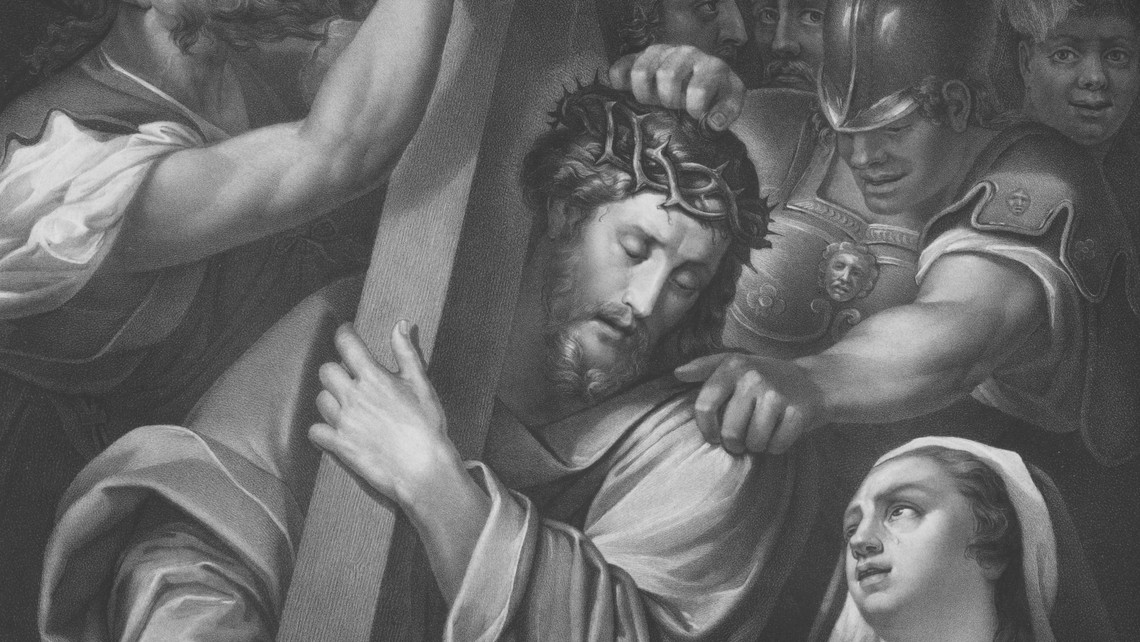
Once the transition toward Christ occurs, and the person joyfully begins to embrace a life with Him, then the path Christ took to save us from our sins by way of the Cross begins to make sense. Now, the way of the Cross is not looked upon with confusion, doubt, or fear; it becomes a daily examination meant to prepare the person for a life with the Savior of the World. The fear of sin is now destroyed by a fear of the Lord, acknowledging His infinite love and mercy. From a practical perspective, the uncovering of sin and the path to Christ means,
- Now I surrender my ego to Christ.
- I entrust my eyes to Christ and not the world.
- Jesus is my true reality.
- The Cross is not my enemy but my path to heaven.
- I have joyful eagerness to confess my sins through the sacrament of confession.
- My life is now transfigured with Christ in the Holy Eucharist.
Abandonment to God is a surrender of the human will to the Divine will of the Father. This surrender requires an ascent of Faith that proclaims Jesus Christ crucified and nothing else. Sin is no longer a prerogative; Christ is. The world is no longer an attraction nor provides the necessary nourishment to sustain man’s spiritual life. Man is now actively sustained by Christ, as witnessed and revealed in His death and resurrection and delivered forward through the institution of the Church and the sacramental life in Christ. Jesus is now the way, the truth, and the life.[7]
Latest Posts

You Must Know Christ to Teach Christ
An important tenet in conveying a religious theme, idea, or doctrine is the visible, active relationship between the person and the religious doctrine conveyed....Read more

The Dilemma of Teaching Religion
G.K. Chesterton once remarked that “One of the chief uses of religion is that it makes us remember our coming from darkness, the simple...Read more

Why Hell Trembled, Alleuia!
One can only imagine the Devil’s blindness that Jesus’ death on the cross was his demise. The Devil’s mission within God’s salvific plan was...Read more
