



There is passive and active awareness of the gift of freedom in the life of man. Active in that we have received a gift from God to think and act freely. The formula of this freedom, rooted in our soul and expressed through our own intellect and will, provides us with an opportunity to actively engage life at our own discretion under the providence of God. The passive awareness of freedom reflects the responsibility to either act in accord with a moral and ethical compass or not. A battle of wills that occurs every time a human being chooses to act.
Before the fall of man, Adam and Eve’s actions were in accord with the will of God. This means they possessed the freedom to engage with one another and the land around them under the grace of God himself. After they chose to seek something greater than what God provided, the Fall of Adam and Eve ushered in a daily dilemma: how to act not just toward one another but toward God himself under the new weight of sin. The newly introduced battle between good and evil has not locked Adam and Eve into a constant dilemma of human actions, inclined to choose something other than God’s love. As the Catechism reminds us, by refusing God’s plan of love, he deceived himself and became a slave to sin.[1]
The true gift of freedom is now blurred and confused. The human act originally intended to be in communion with God is now broken; man now has greater difficulty comprehending true freedom in association with God. What was once natural had become unnatural. Hence, freedom has been surrendered to sin. The Catechism describes the reality of sin as sin, an offense against God, and not a flaw, mistake, or psychological weakness. Sin is an abuse against the freedom that God gives to created persons so that they are capable of loving him and loving one another.[2] When Jesus describes himself as the true vine, he concludes his discourse with a description of the greatest commandment, that you love one another as I have loved you.[3] But, in the following verse, he defines the love of one another by way of the crucifixion, greater love has no man than this, to lay down his life for his friends.[4]
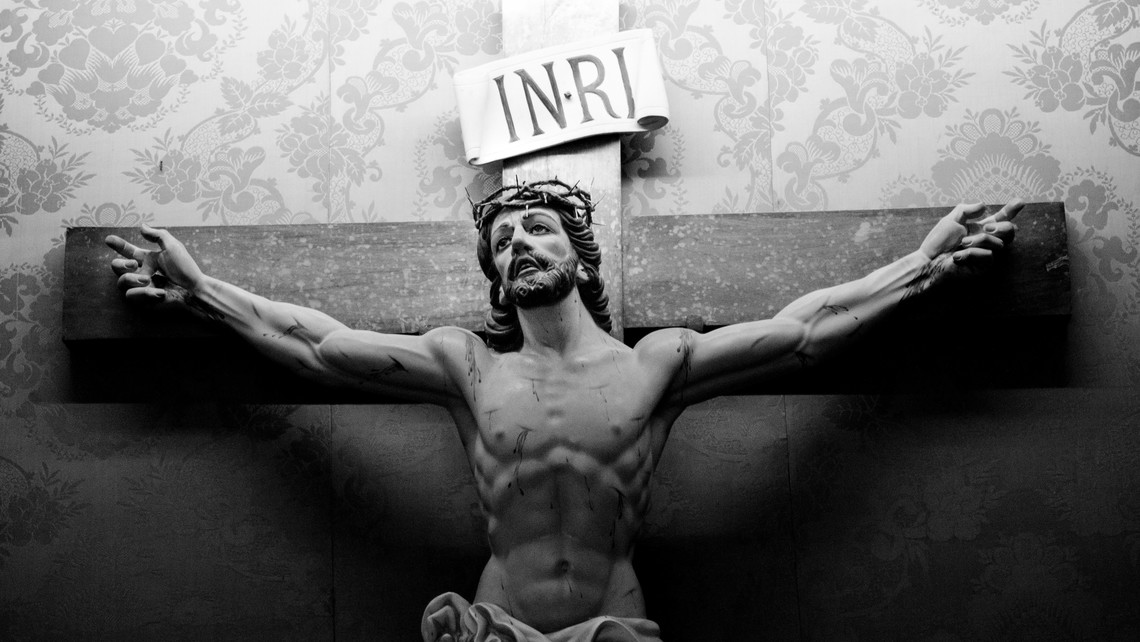
Jesus describes the intimate relationship between his crucifixion, love, and the freedom that ensued from his death, destroying sin and death. In emptying himself, Jesus provides us with a path toward freedom, one where, after our baptism, we receive the opportunity to be in communion with Christ and receive his grace. Our freedom has been restored in Christ to freely choose to seek him and imitate him in our daily living. The Catechism describes freedom in relation to our daily living as follows,
Freedom is the power, rooted in reason and will, to act or not to act, to do this or that, and so to perform deliberate actions on one's own responsibility. By free will, one shapes one's own life. Human freedom is a force for growth and maturity in truth and goodness; it attains its perfection when directed toward God, our beatitude. . . As long as freedom has not bound itself definitively to its ultimate good, which is God, there is the possibility of choosing between good and evil, and thus of growing in perfection or of failing and sinning. This freedom characterizes properly human acts. It is the basis of praise or blame, merit or reproach.[5]
St. Paul reminds us that by Jesus’ cross we have been set free.[6] Because Jesus is the truth, it is his truth that strengthens our freedom.[7] Jesus’ sacrifice on the cross sets the course of salvation history for all men, meaning that our path to freedom begins with the death of Christ. Upon his death and resurrection, man is offered an opportunity to embrace the Cross of Christ and render himself susceptible to the grace and gift of Jesus’ death through baptism. Death is no longer a finality but a true beginning of the union of the soul with God through the Son. The Crucifixion transforms us and allows us to eagerly seek a union with the Messiah, one that can now be seen and understood. The suffering Servant opens the portal to our freedom through his death, who came to serve and to offer his life as a ransom for many.[8]
But God, who is rich in mercy, out of the great love with which he loved us, even when we were dead through our trespasses, made us alive together with Christ by grace, you have been saved, and raised us up with him, and made us sit with him in the heavenly places in Christ Jesus.[9]
Latest Posts

Why the Devil prefers you give up Chocolate
When Christ began his Lenten journey, fasting for 40 days and nights in the desert, it initiated a reality that Christ is to open...Read more

Uncovering Sin and the Path to Christ
In his letter to the Romans, St. Paul makes an important point about the volatile relationship between sin and grace, where sin increased, grace...Read more

How Does One Die to Sin?
There is a constant battle that rages in mankind between the world in which man lives and God the Father in heaven. The carnal...Read more
