



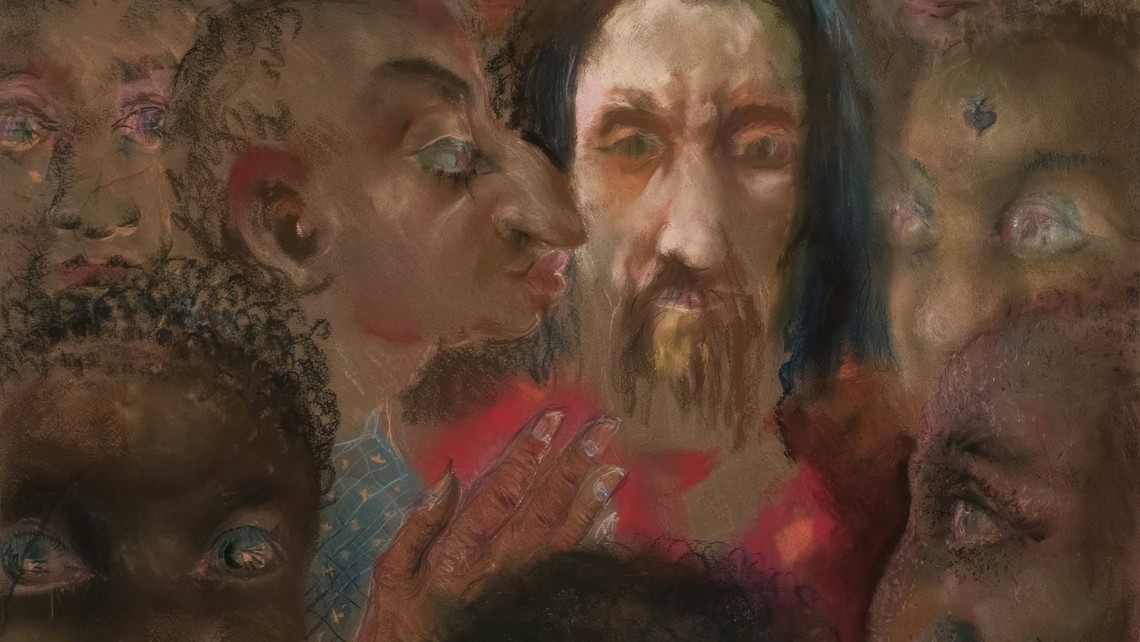
The stillness of the mind is a human act that is often overlooked as a path to spiritual awareness between man and God. One’s ability to stay still or calm ultimately involves an openness to silence where the body, heart, and mind collide in a state of spiritual attachment with God. Silence and stillness are intimately bound together because they provide the foundation for the moral discernment of human actions and their associated responses. This is very important when we encounter physical and spiritual struggles in our lives, where human emotions can overwhelm our sanctity, peace, and common sense. Why is the act of silence and stillness so important in actively maintaining a relationship with God the Father?
Engagement in the acts of silence and stillness, if properly directed toward the Son of God, Jesus Christ, provides one with the ability to distinguish good from evil, thoughts that come from God versus those that do not. The search for God is a relentless pursuit because God never ceases His desire to be in communion with us. This is why we bear His image and likeness in human form and why the Son of Man, Jesus Christ, came so that we might know and understand God’s love for us more intimately. When the Devil tempted Jesus to detach himself from the Father by offering him the riches of the world apart from God, Jesus’ responses were very poignant: man cannot sustain himself apart from God, only God is to be worshipped, and finally, we have no authority to question the will of God (Lk 4:1-13).
Jesus’ responses to the Devil's proposition reveal the importance of having a sound body, heart, and mind because these are the very attributes the Devil chose to attack Jesus with. This is why daily spiritual attachment with Christ is important; it allows us to communicate with Him. When one of the disciples asked Jesus, Lord, teach us to pray (Lk 11:1), the disciple humbly requested to mature in his own prayer life, from a prayer of repentance and fasting instituted by St. John the Baptist to Jesus teaching the disciple how to acknowledge God as the Father and Lord of all.
Acknowledgement of God is not based on feelings or purely human emotions. Our relationship with God can be easily skewed if our desire is only to feel or sense Him instead of knowing Him through a surrender of our will to His. Genuine attachment to God through Christ requires a willful submission of the human heart to the will of the Father. At the heart of a genuine prayerful life lies a desire to serve as an offering to God through His Son Jesus Christ. Humility serves as the way toward attaching yourself to God through Jesus Christ. It also serves as the foundation for prayer because it is the voice of God we seek rather than our own. Intimacy with God presents an opportunity to beg God for daily and constant communication with Him. The human desire to be heard by God unveils a desire to be in intimate communion with Him. If this desire is distorted or misplaced in any way, then one runs the risk of being spiritually detached from God the Father, God the Son, and God the Holy Spirit.
Spiritual detachment occurs when we seek personal fulfillment and answers to requested petitions directed to Christ rather than first offering ourselves in humble submission to Christ. This coincides with a desire to feel Jesus rather than surrender to Him. Spiritual detachment from Christ misconstrues the act of spiritual dryness: when you cannot feel or sense Christ, but in reality, He is there, just not in the way we perceive on a human level. The temptation, as a result of spiritual detachment when prayer does not meet our human desires, is to quit praying altogether. Hence, though we may perceive our human senses betraying us, our Lord never left. He asks us for continual perseverance amongst all of the chaos we may be experiencing. We are reminded in the book of Hebrews that faith is the assurance of things hoped for, the conviction of things not seen. unseen (Heb 11:1-2).
The danger of spiritual detachment creates distance from reception of the sacraments and the sacramental life, the very life Christ offered and died so that we may live with Him. The temptation when we suffer from spiritual detachment is dismissiveness of the sacraments, especially reconciliation and the holy Eucharist. How can we spiritually resuscitate ourselves when we suffer from spiritual detachment from Christ? The first step is to recall where you and I came from; we were made from the love of the Father. From the very beginning, our relationship with God was never intended to be detached from Him. He verified this through the birth of His only-begotten Son. The second step is to embrace a time of stillness and silence with Christ, humbly submitting ourselves to His will and asking for nothing in return. The third step is to return to the sacramental life that Jesus established for us. Jesus died so that we may live; His life is constantly revealed through the sacraments, especially the Holy Eucharist. In the Eucharist we encounter a continual foretaste of heaven.
O Lord, you have searched me and known me! You know when I sit down and when I rise up; you discern my thoughts from afar. You search out my path and my lying down, and are acquainted with all my ways. Even before a word is on my tongue, behold, O Lord, you know it altogether. You beset me behind and before, and lay your hand upon me. Such knowledge is too wonderful for me; it is high, I cannot attain it. Where shall I go from your Spirit? Or where shall I flee from your presence? If I ascend to heaven, you are there! If I make my bed in Sheol, you are there! If I take the wings of the morning and dwell in the uttermost parts of the sea, even there your hand shall lead me, and your right hand shall hold me. If I say, “Let only darkness cover me, and the light about me be night.” even the darkness is not dark to you; the night is bright as the day; for darkness is as light with you. For you formed my inward parts, you knitted me together in my mother’s womb. I praise you, for I am wondrously made.
Psalm 139:1-14
Latest Posts

Are we the cause of our own sins?
If you were to ask someone if he is the cause of his own sins, you would think that the answer might seem obvious....Read more

The Anthropology of Sin and the Path to Spiritual Freedom
In the book of Revelation, St. John the Apostle, whom we attribute as the author, describes the New Jerusalem as a holy city, reminding...Read more

Avoiding the Perversion of our Christian Anthropology
In the suffering servant discourse, the Prophet Isaiah asks, “Who has believed what we have heard?” The question serves as a revelatory precursor of...Read more
