



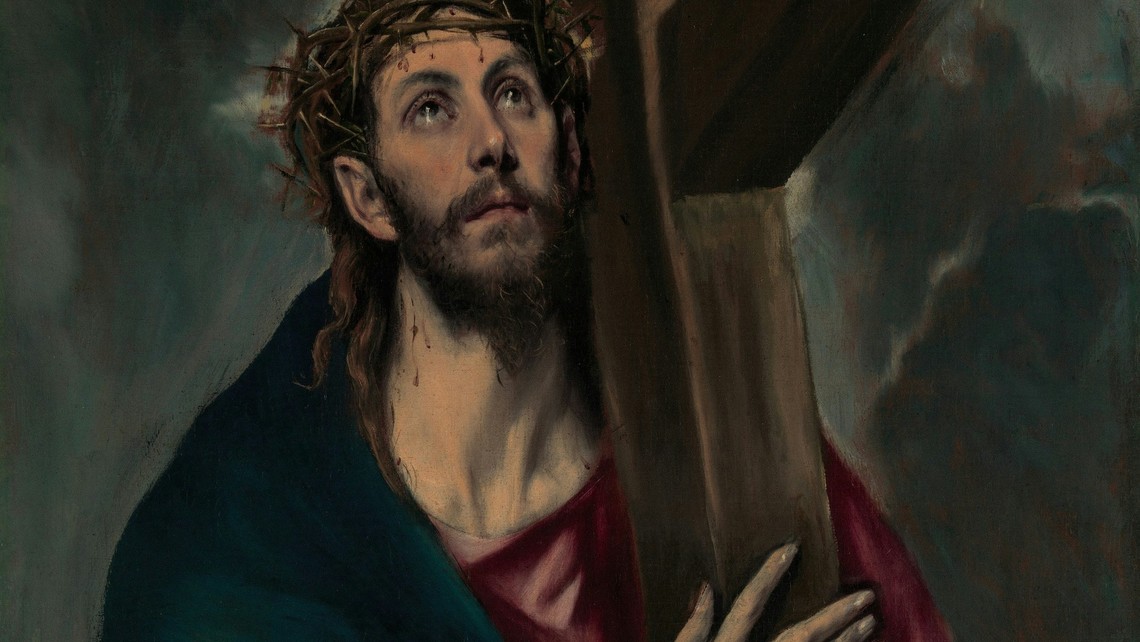
Does a personal experience of faith offer a path to salvation? This question stems from a broader context of a discussion I had with a gathering of Catholic educators about the importance of personal experience as a primary path of faith toward God. The phrases “I sense”, “I feel,” or “I personally believe” were very common amongst the individuals I encountered when discussing the role of the laity in the Catholic Church. The nature of these expressions went further when the role of experience was interpreted as a dogma of faith and a necessary path to salvation. The irony of this is that Christ was not mentioned as part of the path to salvation but more as part of the experience and not the role of Christ in the experience.
When describing a personal experience of faith, does Jesus need to be included as part of that experience? The premise behind this question rests on the argument that when someone discusses their personal experience of faith; does it involve the Son of God, Jesus Christ. The insertion of a personal experience of faith within someone's overall faith journey is part of a natural relationship where one encounters an event, opportunity, word, or an individual that somehow strengthens their belief in God the Father, God the Son, and God the Holy Spirit. In the first letter of St. John, we are reminded of the relevance of the Christian experience,
That which was from the beginning, which we have heard, which we have seen with our eyes, which we have looked upon and touched with our hands, concerning the word of life, the life was made manifest, and we saw it, and testify to it, and proclaim to you the eternal life which was with the Father and was made manifest to us; that which we have seen and heard we proclaim also to you, so that you may have fellowship with us; and our fellowship is with the Father and with his Son Jesus Christ. And we are writing this that our joy may be complete. (1 Jn 1:1-14)
St. Paul confirms with his brethren to hold fast to what they have received and experienced about the Word of God (1 Cor 15:1-2). St. John and St. Paul echo that an experience of faith must lead you to the cross of Jesus Christ. It is a continuing call to conversion as expressed in the Acts of the Apostles, who, upon hearing St. Peter’s proclamation of the salvific events of Christ after Pentecost, urges his fellow brethren to engage in the Apostles' teaching and fellowship, to the breaking of the bread and prayers (Acts 2:42).
Experience as an act of faith is important and serves a vital purpose in the development of the Christian faith if our response of faith to the experience is properly focused on Jesus Christ. The Catechism references the importance of experience, where it describes the faithful sharing an understanding and handing on of revealed truth (CCC 91). This refers to a delivery of an experience rooted in the Trinity and confirmed by Jesus Christ as the Son of God, the Word made flesh, under the guidance of the Holy Spirit. St. John alludes to this formula of faith: “When the Spirit of truth comes, he will guide you into all the truth; for he will not speak on his own authority, but whatever he hears he will speak, and he will declare to you the things that are to come” (Jn 16:13).
Hence, the role of experience in the development of faith cannot be void of the Messiah, the Word made flesh, Jesus Christ. Any form of experience must revolve around the sensus fidei, or the universal teaching of the Church on faith and morals confirmed by Jesus Christ, and delivered under the guidance of the Holy Spirit. This is what we identify as the Magisterium, or teaching office of the Church that safeguards the teachings of the Church in faith and morals. The principal focus of sensus fidei (universal adherence to the teachings of the church in faith and morals) and sensus fidelium (the sense of the faithful to the sensus fidei) is the authentic proclamation, transmission, and articulation of the Word of God and its offspring, the Creed. Thus, the argument is that my experience is somewhat greater than your experience, and because my experience is more important than yours outside of both sensus fidei and sensus fidelium creates an ambiguity of faith in the Chrisian experience.
It is safe to say that Christ did not intend to cause ambiguity amongst the faithful when it came to a proper worship of God the Father through the Son. He came to fulfill the law of God, the law of love, with clarity and charity. The experience of the Law of God was renewed and clarified through the Son of God, who ultimately experienced death for the salvation of all humanity. If our experiences do not somehow resonate with the Way of the Cross and call us toward a deeper conversion and fidelity toward Christ and His Church, then we should take the time to pause, reflect, and discern our relationship with Him. St. Faustyna provides with a fitting conclusion in understanding the gift of experience when properly ordered toward Christ,
During Holy Mass, I saw Jesus stretched out on the Cross, and He said to me, My pupil, have great love for those who cause you suffering. Do good to those who hate you. I answered, "O my Master, You see very well that I feel no love for them, and that troubles me." Jesus answered, It is not always within your power to control your feelings. You will recognize that you have love if, after having experienced annoyance and contradiction, you do not lose your peace, but pray for those who have made you suffer and wish them well.
St. Faustina, Diary, 1628
Latest Posts

Why Hell Trembled, Alleuia!
One can only imagine the Devil’s blindness that Jesus’ death on the cross was his demise. The Devil’s mission within God’s salvific plan was...Read more

Something Beautiful Has Changed
The moment someone recommends a change in your life, the reaction can either be met with resignation, realizing that change is necessary, or resistance...Read more

The Necessity of Suffering as the Path of Salvation
Every time we recite the Creed at Mass, we publicly affirm the suffering of Christ at the hands of Pontius Pilate. To the non-religious...Read more
