



Among the many remarkable literary gifts the great Doctor of Catholic education, St. John Henry Newman, has left us, one resonates as we prepare to recall the nativity of our Lord during this Advent season. In his meditation on the effects of sin, he describes with great detail what sin does to man,
Sin is infinitely worse than famine, than war, than pestilence. Take the most hideous of diseases, under which the body wastes away and corrupts, the blood is infected; the head, the heart, the lungs, every organ disordered, the nerves unstrung and shattered; pain in every limb, thirst, restlessness, delirium, all is nothing compared with the dreadful sickness of the soul which we call sin.[1]
St. Newman’s description of the effects of sin, I argue, should resonate with anyone who understands the significance of why Jesus came and why we celebrate the season of Advent, which marks the reaffirmation of our freedom from sin through the birth of the only-begotten Son, Jesus Christ. The Blessed Mother’s intimate role in the birth of her Son is integral to the Divine narrative through her Immaculate Conception and her free assent to God's will to bear God’s Son. Even more, it should compel us to know and understand what sin actually is and the damage it can inflict on our souls when we freely choose to love something or someone else other than God.
Newman goes on to describe the battle of two wills, one that assents to the word of God and the other to the word of man. He then asks an important question: Is God right or is the creature right?[2] Newman concludes by confirming that through the perilous journey of sin, our comfort and safeguard lies with God the Father alone. The importance of resting with God exemplifies the necessity of exercising an act of faith, which St. John the Baptist exemplified in his affirmation of the coming of the Son of God, where he declares; He must increase, but I must decrease.[3]
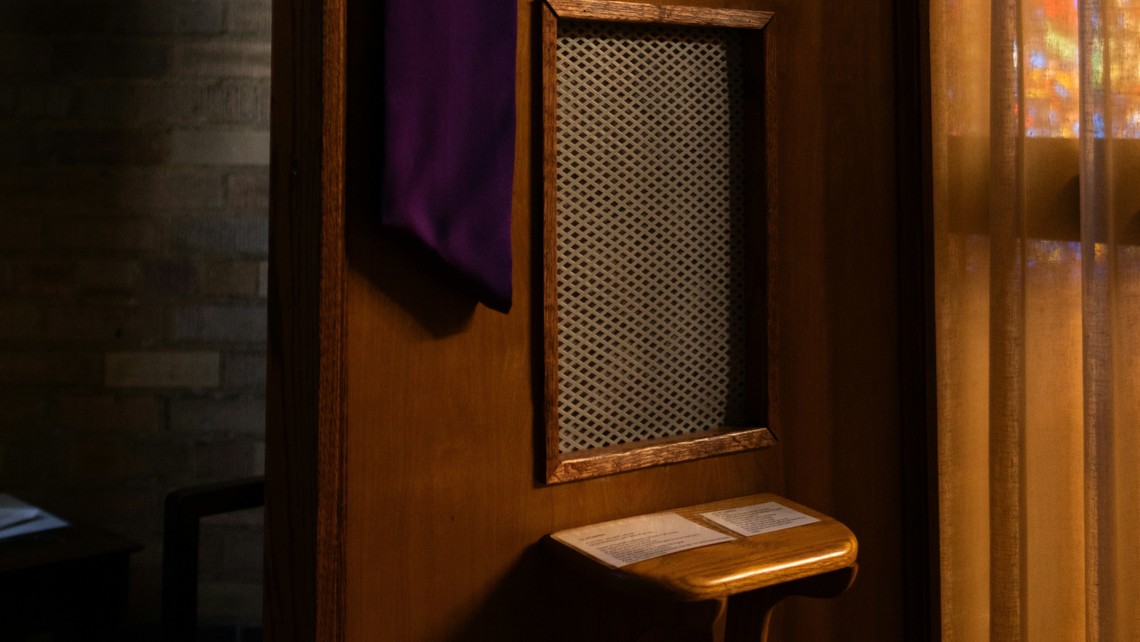
The significance of Advent as the start of a new liturgical season proposes that whatever sins we have been grappling with for some time can now be directed toward the Father through the Son in the sacrament of penance. An opportunity presents itself where we, as children of God, can renew our faith in Christ by making a firm purpose of commitment that sin will no longer have victory over us. We will no longer be chained by the weight of a false reality that champions a joyful life without a relationship with Jesus Christ. St. Ambrose reminds us:
The Lord who has taken away your sin and pardoned your faults also protects you and keeps you from the wiles of your adversary, the devil, so that the enemy, who is accustomed to leading into sin, may not surprise you. One who entrusts himself to God does not dread the devil. If God is for us, who is against us?[4]
The desire to be forgiven for our sins must coincide with the desire to be delivered from evil. The infancy narrative as described in St. Luke’s Gospel attests to this through the words of Simeon in his encounter with the child Jesus in the temple,
Lord, now let your servant depart in peace, according to your word; for my eyes have seen the salvation which you have prepared in the presence of all peoples, a light for revelation to the Gentiles, and for the glory to your people Israel. . . Behold, this child is set for the fall and rising of many in Israel. And for a sign that is spoken against and a sword will pierce through your own soul, also that thought out of many hearts may be revealed.[5]
Simeon’s profession of faith in Christ reminds us of the need to recall our own profession of faith received at baptism on behalf of our parents, or received upon entrance into full communion with the Church. The Forgiveness of Sins is intimately bound to what we received at baptism, as it removes the original sin of Adam but not the consequences of the first sin. Our human nature is left with engaging in the spiritual battle between good and evil, or, in echoing the words of St. Newman, “Is God right or is the creature right?” The season of Advent rightly confirms that God is right because it calls us to prepare for the birth of his Son, who came to conquer sin and death and thus restore us in relationship with Him. The Catechism reminds us that forgiveness of sins brings reconciliation with God, but also with the Church.[6] The spiritual effects of the forgiveness of one’s sins through the sacrament of penance are worth considering,
- reconciliation with God by which the penitent recovers grace;
- reconciliation with the Church;
- remission of the eternal punishment incurred by mortal sins;
- remission, at least in part, of temporal punishments resulting from sin;
- peace and serenity of conscience, and spiritual consolation;
- an increase of spiritual strength for the Christian battle.[7]
The actual effects of freely receiving the sacrament of penance appear difficult to disregard when associated with the Lamb of God who came to take away the sins of the world.[8] As the author of the sacramental life, Jesus can address every sinner and lead us to spiritual holiness and freedom if we freely choose. He reminds us of this in St. Luke’s Gospel when he tells the paralytic, “Your sins are forgiven.”[9] Advent provides us with the opportunity to both reclaim our identity with God as his children, but also reclaim our relationship with Christ in joyful celebration and anticipation in the coming of our Lord and Savior Jesus Christ!
Latest Posts
The Risk of Forgiveness
When confronted with the opportunity to forgive someone, would you? Some may say that it depends on the gravity of the act or circumstance....Read more
The Risk of Making the Sign of the Cross
There is something to consider and ponder when the expression of a religious gesture can foster such discomfort amongst people, even those who are...Read more

The Risk of Fearing God
The idea that human fear is intimately associated with God may sound and appear as either an anomaly or a contradiction. In a worldview...Read more
